
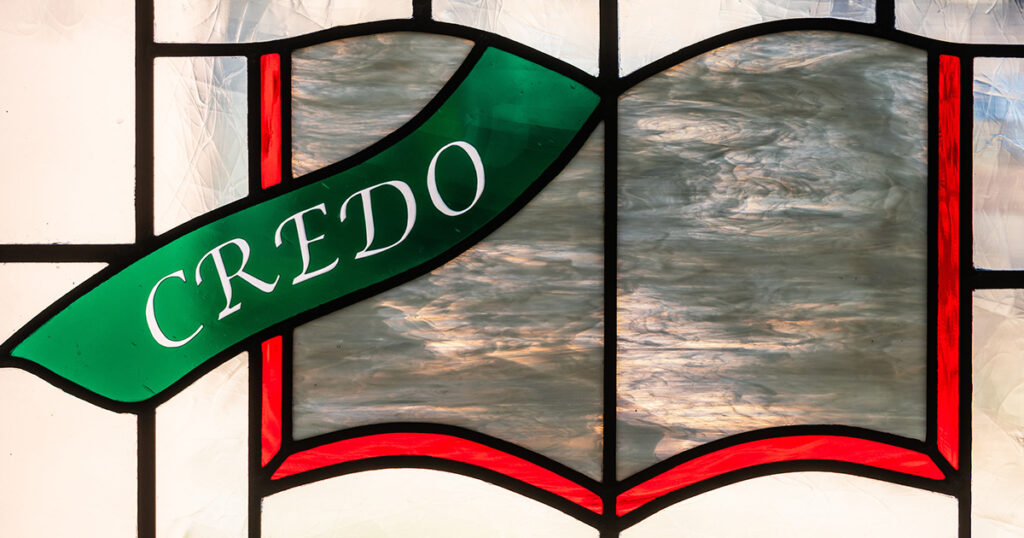
The prevalent method of high medieval philosophy and theology is known as Scholasticism. This method distinguishes between the Latin terms credere (to believe) and credere in (to believe in). This is how Scholastic theology makes the subtle but important distinction between Credere Deum (to believe God exists) and Credere in Deum (to believe in God). The first implies belief in God without a personal relationship. The second implies a close personal love and trust in God.
Two definitive statements of Christian faith are the Apostles’ Creed and the Nicene Creed. In their Latin versions, you can see they emphasize more than believing God exists. The opening phrase of each creed emphasizes a personal love and trust in God.
- Credo in Deum – I believe in God (Opening phrase of the Apostles’ Creed)
- Credo in unum Deum – I believe in one God (Opening phrase of the Nicene Creed)
Please note this subtle but important distinction between Credere Deum (to believe God exists) and Credere in Deum (to believe in God) is found in the New Testament. James 2:19 states, “You believe that God is one; you do well. Even the demons believe – and shudder!” Therefore, Credere Deum is mere intellectual assent to God’s existence (theism) or belief that God is one (monotheism). But Credere in Deum displays the inner reality of belief through a personal love of God and for those in the world around us.
~Boethius ~